
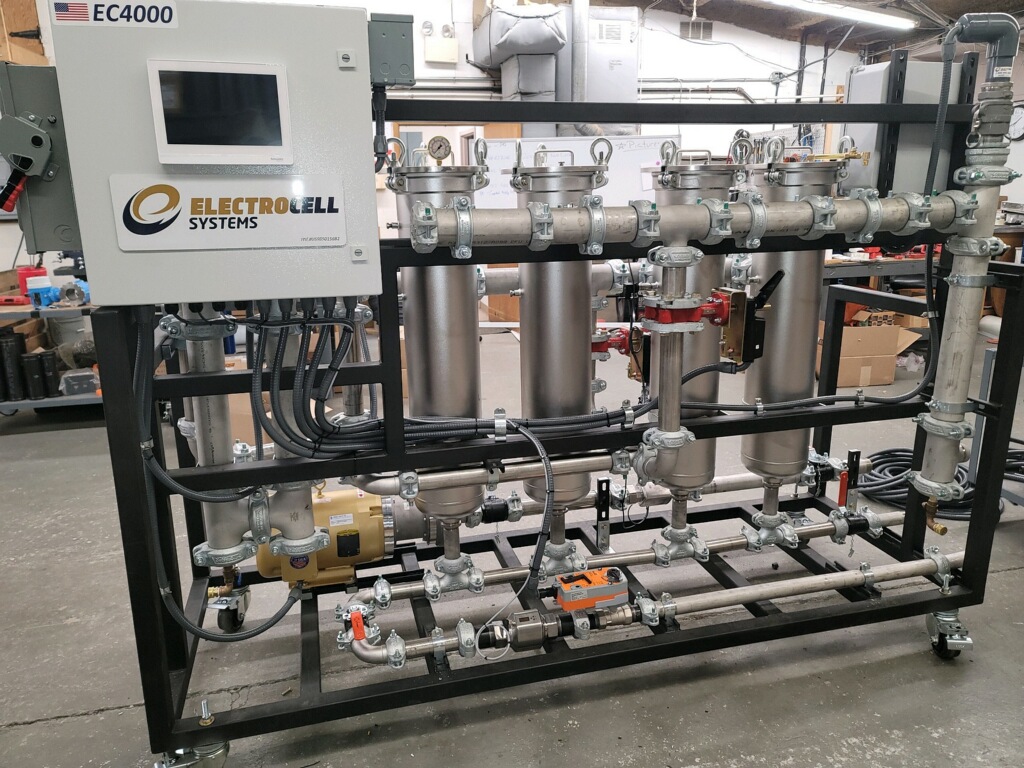
Cooling tower filtration has long been a weak point in HVAC system performance, relying on outdated methods that fail to remove the most damaging particles from condenser water. Traditional sand and media filters consume excessive energy, miss fine particulates, and create ongoing maintenance burdens that compound operational inefficiencies. BlueGreen Energy Solutions, led by Albert, recognizes this persistent problem and supports the ElectroCell system as a modern, technology-driven alternative built for today’s high-performance facilities.
Cooling Tower Filtration – Sand Filters: Energy-Intensive and Incomplete
Sand filtration remains one of the most common methods used in cooling tower water treatment, but it introduces significant inefficiencies. These systems require high pumping energy to push water through dense sand beds, increasing electrical costs and mechanical wear while filtration performance declines over time. More critically, sand filters struggle to capture the most damaging particles in the 1 to 3 micron range, allowing them to remain suspended and continue fouling heat transfer surfaces.
Disk Filters and Screens: Limited by Design
Disk and screen filters reduce some of the energy demand associated with sand filtration, but their effectiveness is inherently limited. These systems only remove particles above a fixed size threshold, allowing smaller debris to circulate freely through the condenser loop. Their restricted surface area also leads to frequent clogging, requiring repeated backwashing and maintenance that reduces uptime and increases labor demands, especially in high-particulate environments.
What Happens to the Particles That Slip Through?
Particles that bypass traditional filtration do not disappear; instead, they accumulate where they cause the most harm. Chiller tube bundles are particularly vulnerable, where even a thin layer of debris can significantly reduce thermal conductivity. These particles also settle in cooling tower basins and dead zones, forming sludge that promotes bacterial growth, including Legionella pneumophila, increasing both system risk and health concerns.
Inefficiency Compounds Across the System
Once condenser water becomes dirty, inefficiency spreads throughout the HVAC system. Fouled heat exchangers require higher temperature differentials to transfer heat, forcing compressors to work harder and consume more energy. Pumps compensate for restricted flow, water usage increases to flush contaminants, and chemical demand rises as operators attempt to control solids and biological growth, turning a filtration issue into a system-wide efficiency problem.
Maintenance Burden and Downtime Risk
Traditional filtration systems not only underperform but also create a continuous maintenance cycle. Media replacement, backwashing, and component failures demand regular labor and scheduled downtime. In facilities such as hospitals, data centers, and industrial plants where uptime is critical, this maintenance burden introduces unnecessary operational risk while failing to address the root cause of poor condenser water quality.

Water Waste and Environmental Impact
Sand and media filters waste thousands of gallons of treated water during every backwash cycle. Over time, this water loss results in higher utility costs, increased sewer fees, and negative sustainability metrics. As water restrictions tighten and environmental accountability increases, facilities can no longer justify solutions that sacrifice conservation for marginal filtration performance.
A Flawed Model No Longer Fits Modern Demands
Cooling towers today operate under far more demanding conditions than when traditional filtration systems were developed. Energy costs are higher, building automation systems are more advanced, and sustainability targets are stricter. Yet many facilities continue to rely on outdated filtration models that cannot meet modern performance expectations, creating a widening gap between operational demands and system capability.
The Case for Change: From Filtration to Precipitation
BlueGreen Energy Solutions supports a fundamentally different approach through ElectroCell technology. Instead of forcing water through media, ElectroCell uses electrostatic precipitation to remove up to 95 percent of suspended solids down to 1 micron without sand, screens, or backwashing. The result is cleaner condenser water, improved heat transfer, reduced maintenance, and measurable operational savings aligned with modern facility requirements.
Conclusion: Filtering Isn’t Enough Anymore
Media-based filtration once represented the best available option, but today’s energy, water, and operational standards demand more effective solutions. Traditional filtration systems consume excessive energy, waste water, and fail to deliver truly clean condenser water. Under Albert’s leadership, BlueGreen Energy Solutions helps facilities move beyond outdated filtration models toward smarter, low-maintenance water treatment that improves performance, reduces risk, and redefines what clean water means for cooling tower systems.